Overview
Looq AI is developing fundamental computer vision technology that is versatile, robust and continuously improving. Albeit, all engineering efforts, the world’s complex conditions, places and environments that do not lend themselves to imaging in all cases, make 3D geometric estimation highly difficult and sometimes unreliable. This document summarizes a set of those conditions that Looq AI currently does not support yet, and that our users have tried to deploy our technology on.
While you may try any environment (within reason please), we cannot guarantee data quality, or reconstruction capability in such conditions. We ask you to refrain, and do not rely on data captured outside of our standard recommended deployment conditions and processes.
Indoor scenes or poor GNSS
Our algorithms have been designed for exterior use at this time with a reliance on GNSS positioning using the integrated antenna in the qCam. The optimal collection has strong GNSS positioning which is weak in heavy vegetation, around tall buildings, or is entirely not available in indoor spaces.
Recommendation: Do not capture full interior scenes at this time. It is possible to capture short durations indoors or in GNSS denied environments provided the capture begins and ends in areas with strong GNSS positioning.
Dark scenes
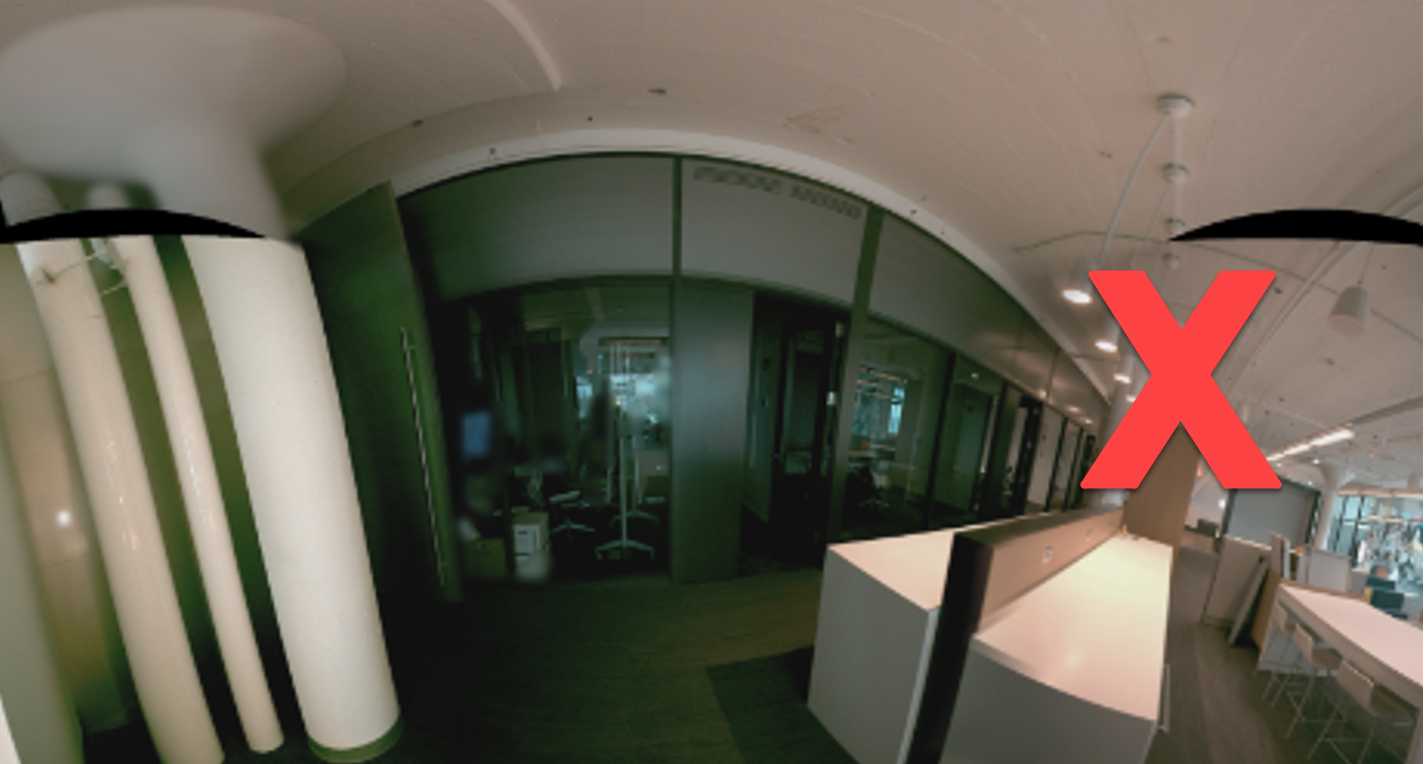
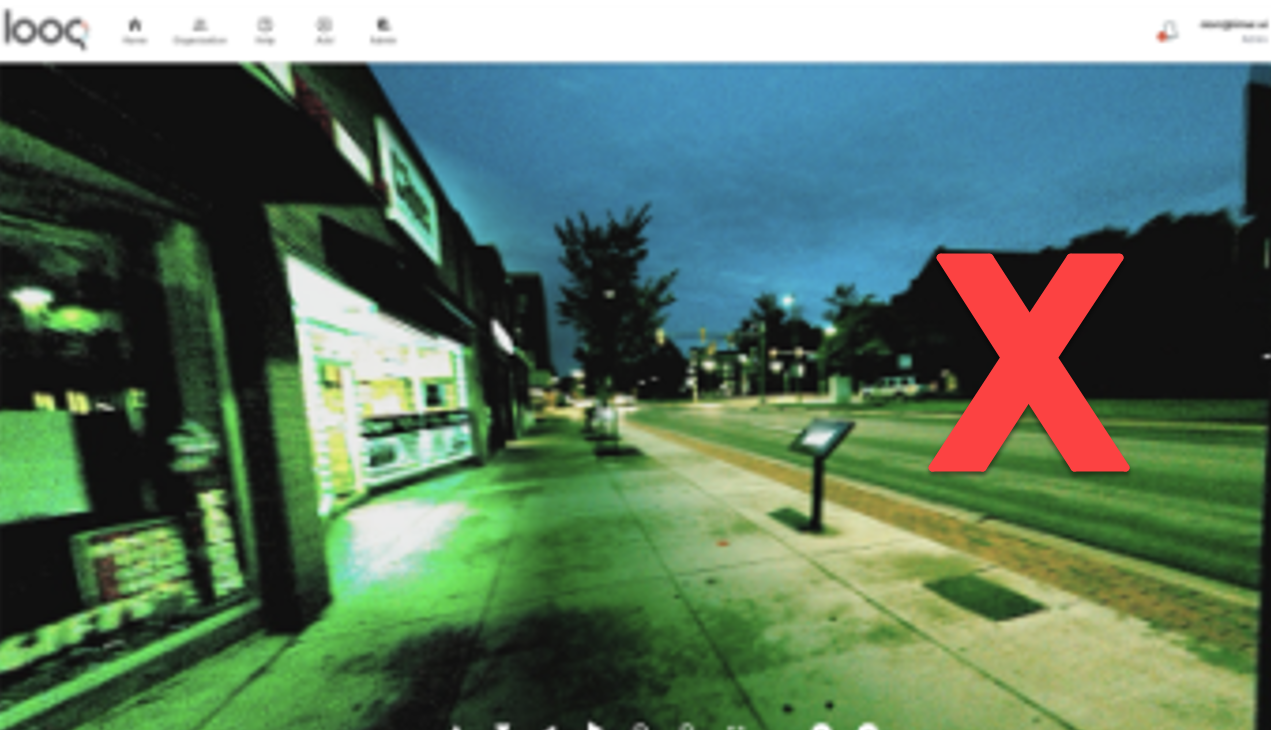
Light is necessary for photography, and without it, the camera needs to increase both exposure times and gain to try and become more sensitive in low-light conditions. This causes image noise and motion blur which will negatively impact geometric reconstruction or complete processing failure.
Recommendation: Do not capture at dawn/dusk or at night. If you see the images turn green, end the capture and restart when more light is available. For small spaces such as manholes, please use the “flash” mode which will illuminate scenes up to ~15ft.
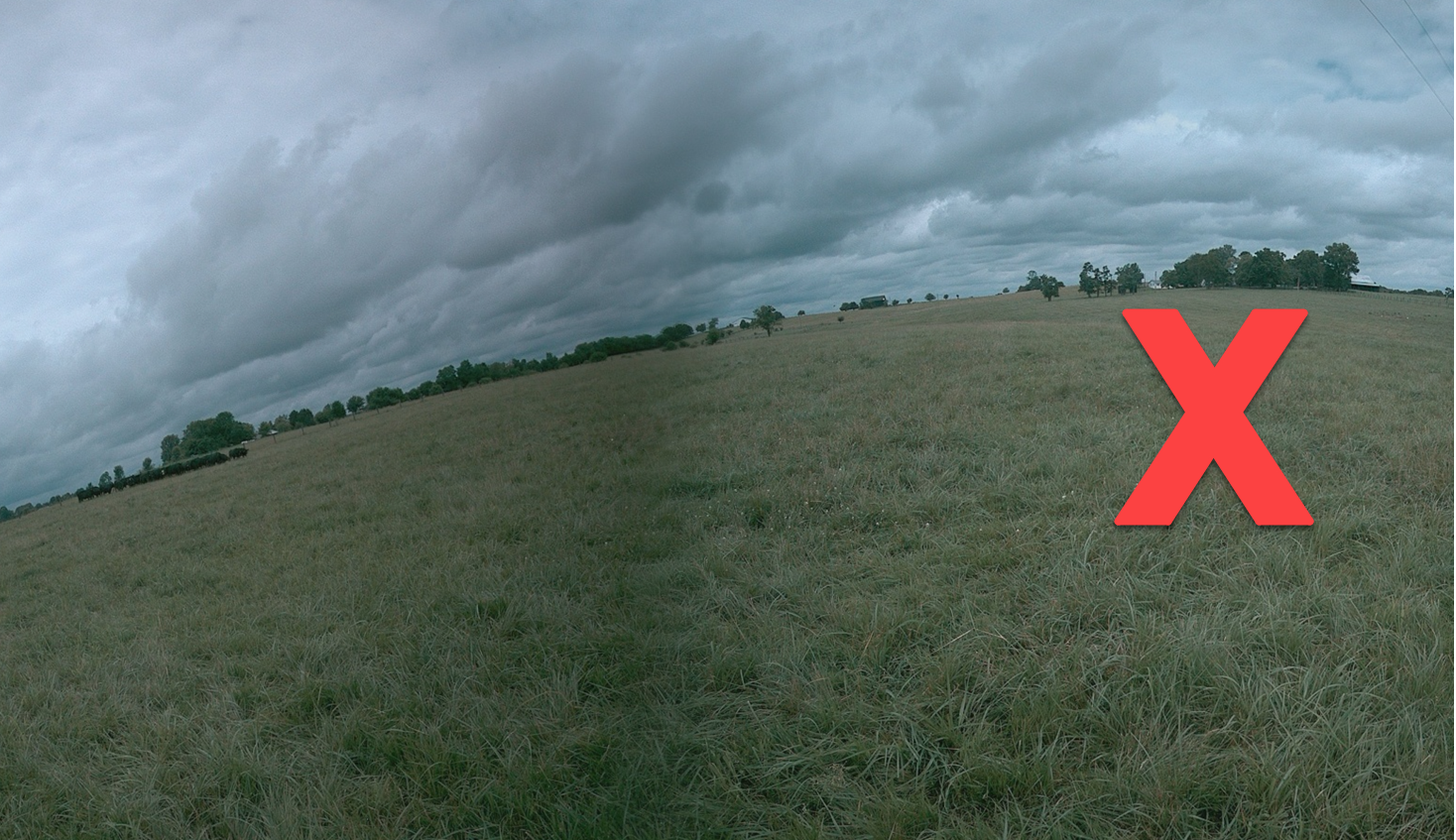
Dense vegetation / tall grass
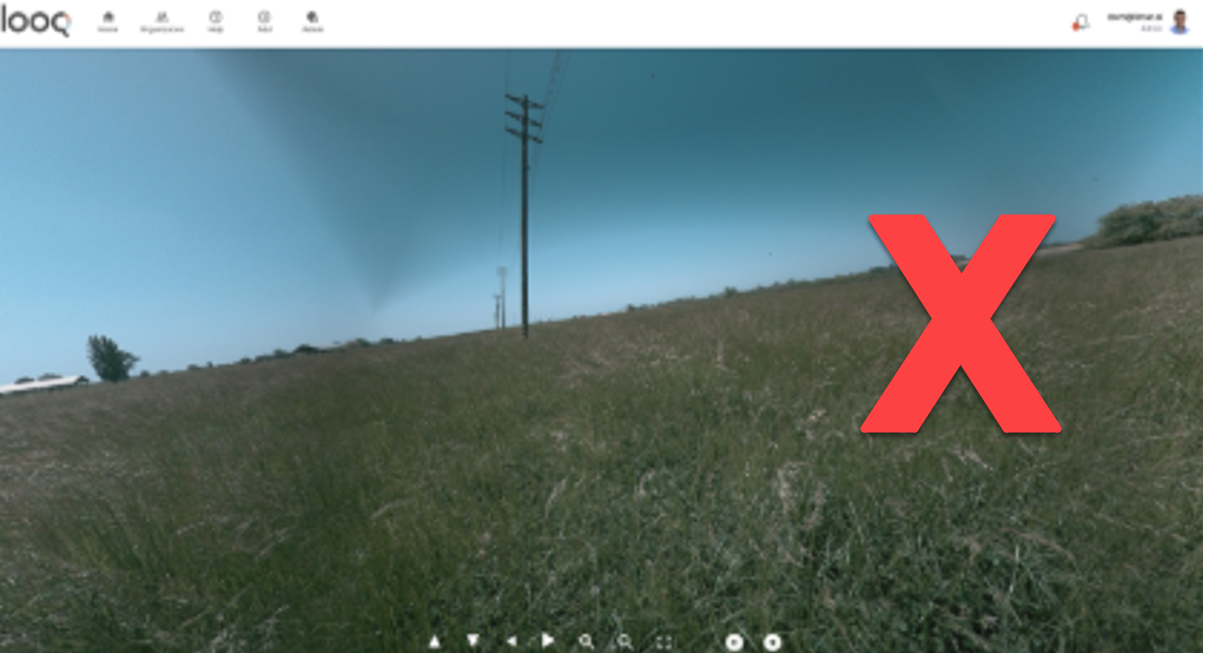
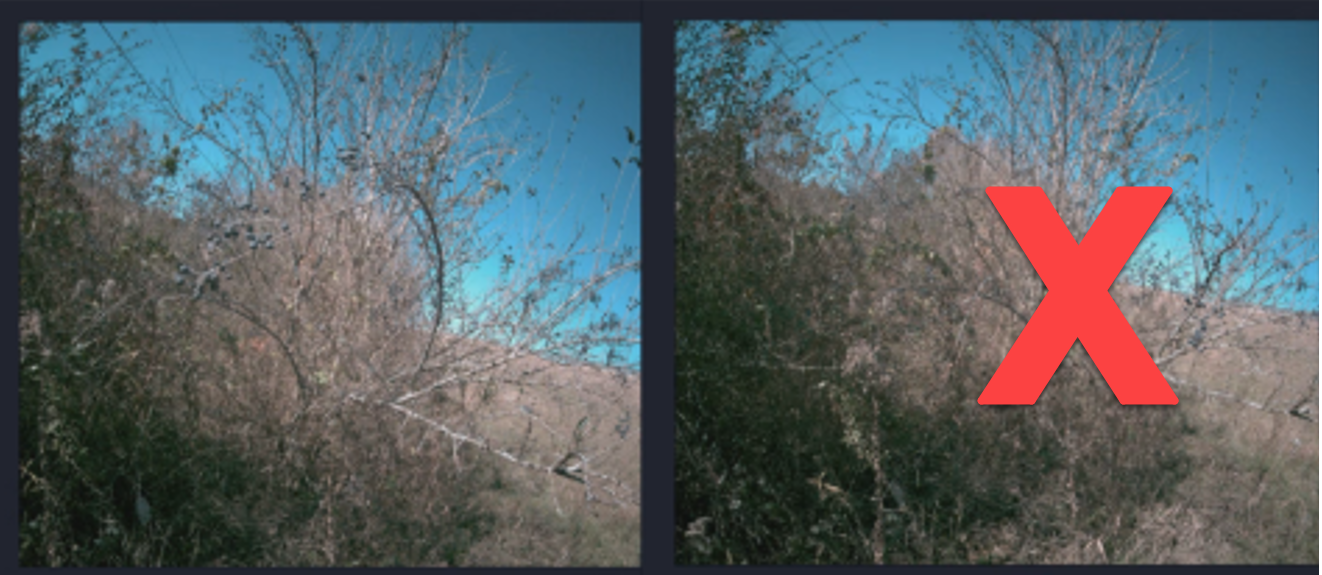
Our algorithms require unique image features to match from one image to another. Scenes that have strong, non-unique patterns such as prairies with tall grass, or bushes can confuse the algorithms. Placing the camera too close to vegetation can lead to confusion and mismatching causing incorrect or missing geometry.
Recommendation: Do not capture in tall grass or dense vegetation. Do not push away vegetation using hands or feet when collecting. Clear the vegetation down to the ground for the camera to clearly see beforehand, collect slower and avoid abrupt movements, and keep a minimum distance of 1m between the camera and any vegetation.
Featureless scenes
Image matching requires unique features across images, which do not exist on images of blank walls, windows, grass, or lacking vertical features. Images need to be sufficiently rich in features and contrast for geometric estimation and depth analysis otherwise this can lead to misalignments and incorrect or missing geometry.
Recommendation: Ensure the scene has strong features such as brick walls, concrete, roadway markings or vertical features such as poles that are clearly visible in the images. Move slowly and continuously to prevent motion blur.
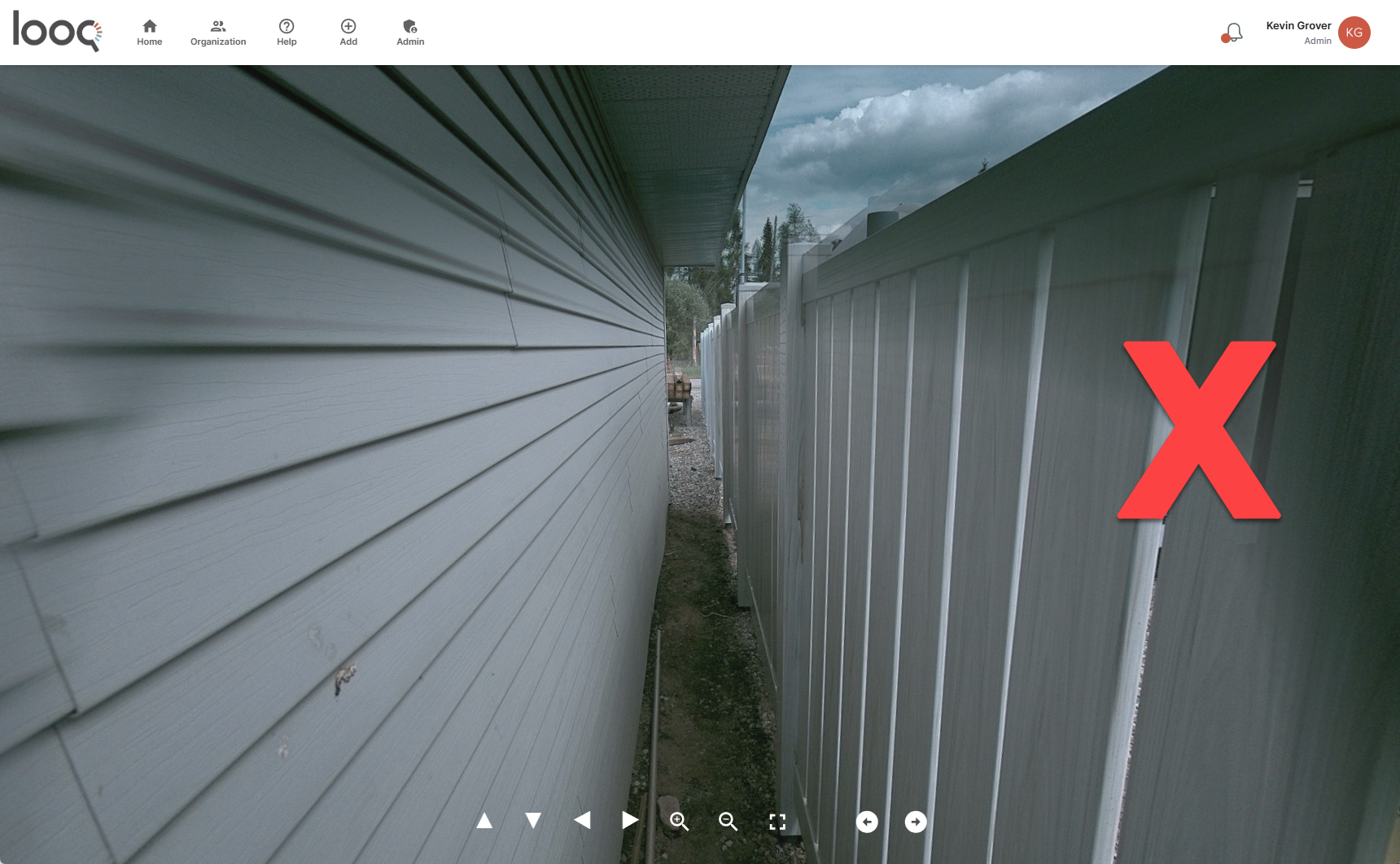
Narrow spaces or too close to objects
When too close to objects in the scan (narrow walkways, vegetation, walls), the qCam may not collect enough overlapping imagery to properly reconstruct the scene. If the operator of the qCam is visible in the images, this blocks the view of the side cameras which can cause the reconstruction to fail.
Recommendation: Keep a minimum distance of 1 m (3 feet) between the qCam and any object in the scan including walls, vegetation or people. Ensure the qCam operator is not visible in any of the imagery when capturing.
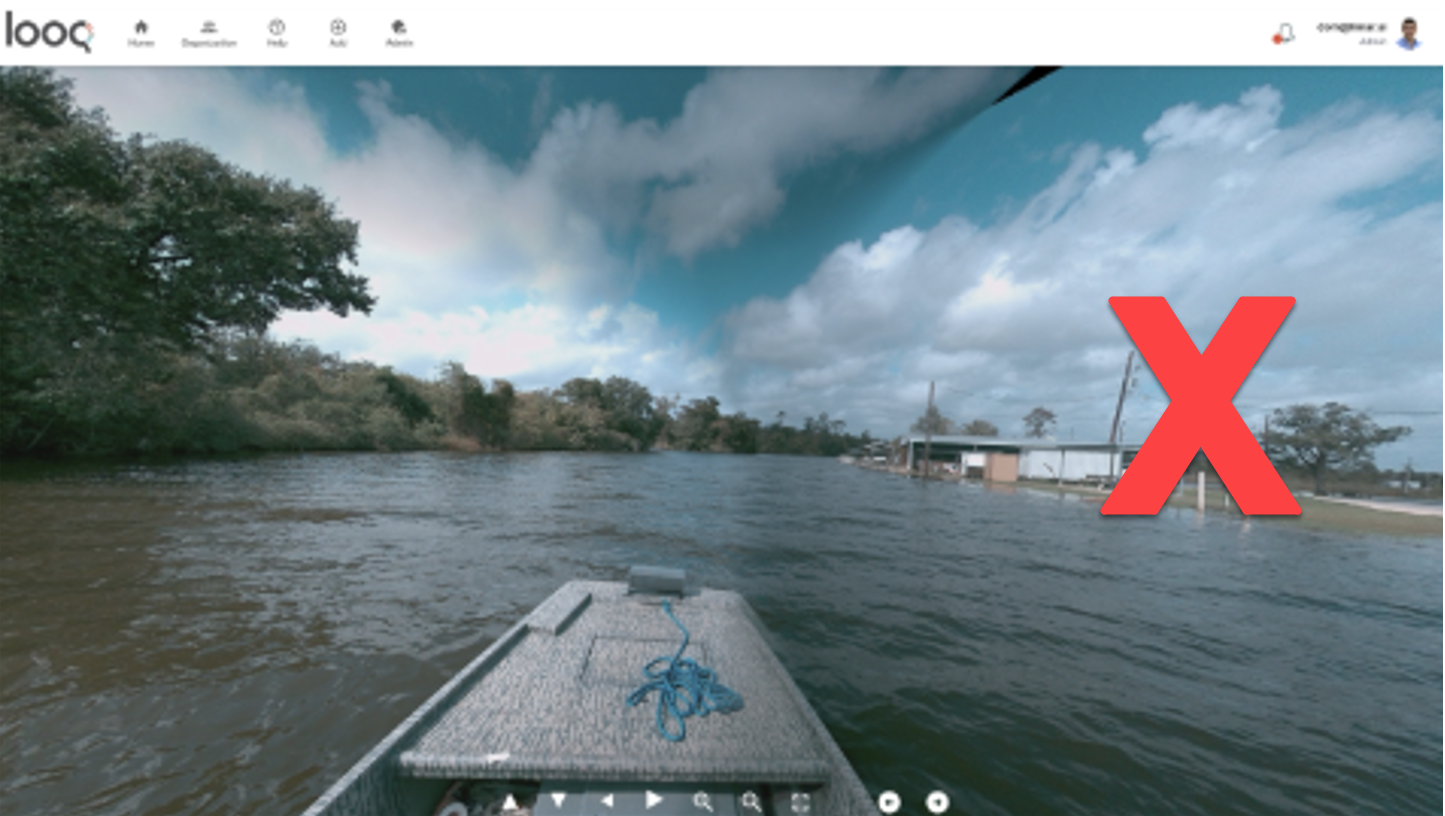
Moving vehicle capture (car, boat, scooter, bike)
The qCam system is limited in how fast it can capture images. If the qCam is moving too quickly, the capture speed will be too slow to ensure enough image overlap and can also result in motion blur. Water surfaces are continuously moving and therefore make matching geometry across images impossible.
Recommendation: Capture by foot up to a brisk walking pace. If you want to try to use a vehicle, ensure careful mounting that ensures that the camera does not see the vehicle and keep all speeds under 10 km/h (6 mph). Do not capture from a boat.
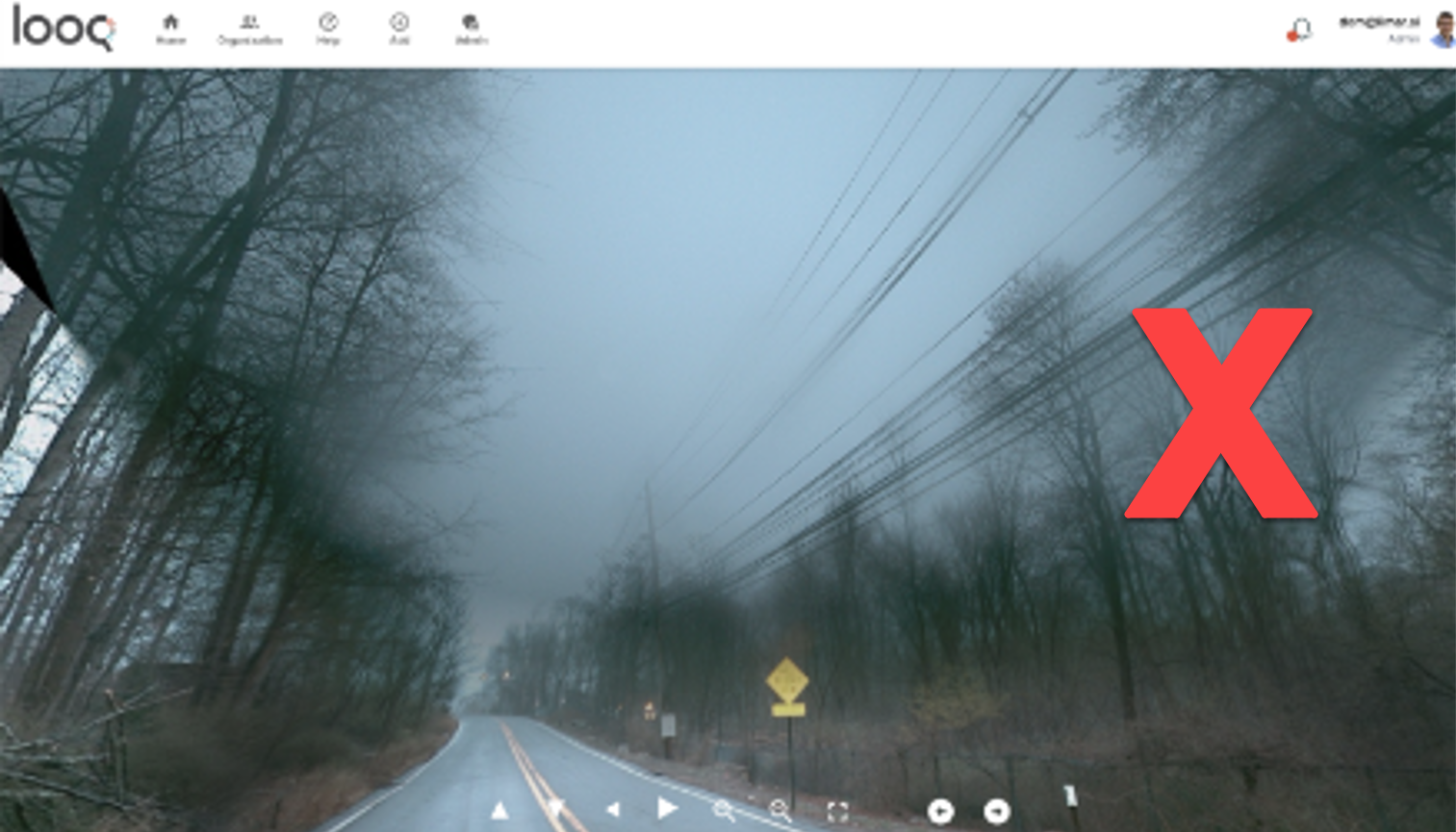
Inclement weather (wind, snow, rain)
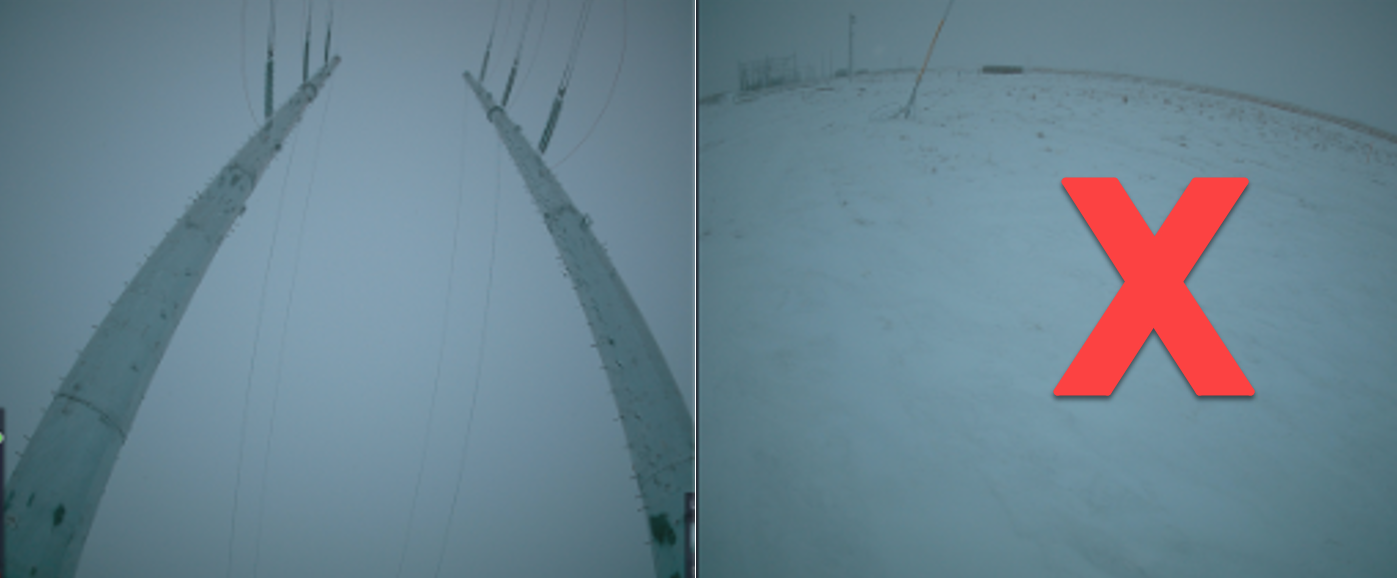
In the event of fogging or rain drops accumulating on a camera lens, this will cause geometric warping that prevents the scene or geometry to reconstruct. In a snow/white-out condition where the sky blends with the snowy ground, this makes it very difficult for the camera to reconstruct. Wind additionally changes the 3D locations of these features making reconstruction even harder.
Recommendation: Capture in good weather conditions, and in the event of light rain, ensure to wipe any affected lenses with a cloth at an appropriate rate.
Water
Scenes with water bodies are difficult to reconstruct. Due to the reflections from the water, and the fact that the water body itself can be moving this makes it difficult to reconstruct as the scene conditions are changing. As our algorithms rely on feature matching of static objects in the scene we cannot reconstruct scenes with large bodies of water.
Recommendation: Avoid capturing areas around large bodies of water.
